Saturday, 5 January 2013

OfCom 2012 complaints overview

Reality shows, news and docs dominated the top 10 most complained about TV shows of 2012 (see here for a Guardian countdown of the 2011 top 100, here for 2010 (Mail) here for 2009 top 10 (Guardian)). OfCom has some support to take on the PCC as part of its portfolio in 2013, though the Tories are opposed to this so its unlikely to happen, but here's an outline of some major case studies involving OfCom in 2012.

X FACTOR STILL A COMPLAINTS HIT
Life is Bliss for Lorna, but not ITV
C5's Big Brother may have topped the OfCom list, but the X Factor (2nd on the 2012 list), which generally manages to feature high up on this annual list, remained high on the radar. It was widely accused of a fix, a complaint rejected by OfCom in November 2012 (remember, there was a huge 2008 scandal over TV phone-in competitions being fixed, leading to large OfCom fines and the BBC banning all competitions with prizes after being hit with a £400k fine [see also]). There was also the by now traditional complaints over saucy pre-watershed performances (this one, about a Britney impersonator Lorna Bliss, sparked 35 complaints - rejected as OfCom deemed it obviously comical). As I'll note below, the X Factor was also drawn into the major controversy that emerged late in 2012 over child protection issues.
Back in March it was guilty of pre-watershed swearing (Frankie Corcozza), and January saw controversy over Tulisa's on-arm advertising.

CHILD PROTECTION ISSUES HIGHLIGHTED
Child protection issues, which make for a great exam case study as this is such a pertinent issue for TV and press alike, with plentiful historical and contemporary cases (touching on the Royals too), were highlighted by OfCom as an issue requiring meetings with broadcasters to remind them of their responsibilities.
Broadcasters have been summoned to a meeting with media regulator Ofcom over concerns about the exploitation of children in programmes including I'm A Celebrity ... Get Me Out of Here!.
All of the major broadcasters, including the BBC, ITV, Channel 4, Channel 5 and BSkyB, have been called to a meeting in the new year to discuss their duty of care to under-18s as part of the rules under which they all broadcast.
The regulator will also carry out a programme of "spot check monitoring" of broadcasters' output to monitor that they are complying by the rules, it said. [from http://www.guardian.co.uk/media/2012/dec/17/ofcom-summons-broadcasters-child-exploitation]
BBC CENSURED FOR 13-YEAR-OLD IN LINE OF DUTY ... and DICK + DOM!
The BBC was censured for featuring a 13-year-old actor in violent, distressing scenes in its (excellent!) drama Line of Duty:
The BBC was guilty of a "serious lapse" in its duty of care for a 13-year-old actor who appeared in violent scenes in BBC2 drama Line of Duty, media regulator Ofcom has ruled.
Ofcom said programme-makers did not do enough to protect the child actor, who appeared in scenes in which he was headbutted and attempted to sever a policeman's fingers with pair of bolt-cutters.
The BBC said it was in "constant dialogue" with the teenager's parents who were content that he could cope with the emotional demands of the drama despite it being his first acting role.
But Ofcom, acting on a single complaint from a viewer, said the programme had breached broadcasting rules requiring that "due care must be taken over the physical and emotional welfare and the dignity of people under 18".
The regulator said 13-year-old Gregory Piper, who played character Ryan Pilkington, a child-runner for a violent criminal gang, had appeared in scenes which were "of a particularly violent nature and included sexually explicit language". [from http://www.guardian.co.uk/media/2012/dec/17/bbc-line-of-duty-child-actor]
There was hoopla over Dick + Dom
The BBC were also investigated over an eating contest in kids' TV show Dick and Dom, in which a young participant retched, which came close on the heels of 35 complaints over an X Factor audition which featured footage of two teens clearly mortified at the terrible audition by their mother:
Ofcom is also investigating the show to see whether the competition may have broken rules relating to generally accepted content standards.
Under this rule Ofcom will investigate whether the show may have caused offence on grounds such as distress, humiliation and violation of human dignity.
In September Ofcom launched an investigation on similar grounds into The X Factor performance of Alison Brunton, who delivered an embarassingly bad rendition of Lady Gaga's hit The Edge of Glory.
Brunton's children – a 14-year-old girl and 16-year-old boy – were repeatedly shown looking horrified and humiliated by their mother's appearance on the show. Guest judge Mel B described the audition as "horrific". [from http://www.guardian.co.uk/media/2012/dec/04/ofcom-investigate-bbc-child-eating]
You could usefully contrast this stance with the OfCom ruling over Sky News' notorious Kay Burley, previously accused of explicit political bias in her reporting, cleared of causing distress in a report over a missing person. 

WILL SAVILLEGATE SEE OfCom TAKE ON BBC IN 2013?
Once revered now reviled
Lets not forget either that this was the year in which the BBC was severely rocked (to the joy of its right-wing foes, who managed to overlook their own failure on this very issue) by the appearance of blocking a Newsnight report into accusations that Jimmy Saville was a serial paedophile to safeguard a celebratory show already completed (the £2m [13,000 license fees!] Pollard Report found this wasn't the case). Here's a timeline. Roy Greenslade links to many of the press articles on this - even the cenre-left press weren't impressed with the BBC, the Mirror slamming it as a shambles. The Guardian was also scathing. Public opinion was little different: a poll reported that 49% of the public trusted the BBC less as a result of the scandal. This could be a major story still in 2013 as the poor handling of it by the BBC has reinforced calls for OfCom or some other regulator to take over complete responsibility for regulation of the BBC (OfCom currently oversees issues of taste and decency).

 OfCom REMIND BROADCASTERS ABOUT RESPONSIBILITY TO U-18s
Note the stark contrast with the PCC here: not only had the actor's parents not complained, they'd actually made clear they had no issue with this - as did the actor - yet OfCom still acted after a single third-party complaint. OfCom's December 2012 bulletin carries the detailed ruling, plus a section headed Note to Broadcasters: The involvement of people under eighteen in proigrammes. As they reminded broadcasters:
Section one of the Ofcom broadcasting code states that "due care must be taken over the physical and emotional welfare of people under 18 ... irrespective of any consent given by the participant or by a parent, guardian or other person".
It goes on to state that people under 18 "must not be caused unnecessary distress or anxiety by their involvement in programmes or by the broadcast of those programmes".
The regulator said in a statement on Monday: "Ofcom reminds all broadcasters very strongly that, not only must they have robust procedures in place to ensure their compliance with rules 1.28 and 1.29 of the code, but they must also ensure that those procedures are adherred to at all times." [quoted from http://www.guardian.co.uk/media/2012/dec/17/ofcom-summons-broadcasters-child-exploitation]

OTHER PRE-WATERSHED OfCom RULINGS/FINES: E! ENTERTAINMENT + PORN AGAIN
It wasn't just the major terrestrial broadcasters under fire for their lax policies on protecting children in 2012, other digital channels also came under fire, such as this NBC-Universal subsidiary:
Ofcom has fined NBC Universal-owned channel E! Entertainment £40,000 for broadcasting episodes of Girls of the Playboy Mansion when children were likely to be watching TV.
The media regulator has decided to fine the channel in part because it has previously broken the UK broadcasting code for airing two other programmes during the day that were unsuitable for showing before the 9pm watershed.
In the latest case E! Entertainment aired consecutive episodes of Girls of the Playboy Mansion during the day on 27 December, the festive season when children and families are on holiday and frequently watch daytime TV.
Ofcom said the Christmas holiday period is also a time when a lot of children watch TV alone, making the scheduling of the episodes a breach of rule 1.3 of the broadcasting code, which aims to protect children from inappropriate content.
The media regulator took a dim view of the breach, given that it follows a previous sanction over two shows that used "the most offensive language" being broadcast before the watershed. [from http://www.guardian.co.uk/media/2012/nov/16/ofcom-fines-e-entertainment]
Love Shaft: judged unsuited for T4's youth audience
C4 was also censured for repeating Love Shaft during its morning T4 youth strand in November.
Porn was raised as an issue - again (4 channels were closed in 2010 for making material accessible to children). What is also noteworthy here is the international aspect: the stations in question in 2012 were Dutch-owned and operated, and so OfCom turned to the Dutch regulators for help on content viewed by UK children:
Ofcom has complained to the Dutch media regulator about the content of adult chat channels Babestation and Smile TV, which are licensed in the Netherlands but broadcast to millions of Freeview households in the UK overnight and can be easily accessed by children in their bedrooms.
The UK media regulator said that " this is an important issue, and active discussions are under way" with Commissariaat voor de Media (Dutch media authority), the country's content licensing body, to see how British audiences can be protected from scenes of near naked women massaging each other's breasts, masturbating and faking orgasms.
Babestation and Smile TV broadcast free to air on digital terrestrial TV service Freeview between 10pm and 6am. Adult channels feature in two blocks on the Freeview electronic programme guide, 93-98 and 190-198.
Ofcom has previously revoked the broadcast licences of adult pay-TV channels including Tease Me for repeatedly airing material that was too sexually explicit for pre-watershed hours. [from http://www.guardian.co.uk/media/2012/mar/07/freeview-porn-ofcom-action]


2012 OFCOM COMPLAINTS TOP 10
Here's the 2012 top 10 (from the Mail):

TOP TEN MOST COMPLAINED ABOUT TV SHOWS IN 2012

1. Big Brother (2,088)
2. The X Factor Results (1,488)
3. This Morning (811)
4. True Stories: Gypsy Blood (509)
5. Live: The Silent Ascent (378)
6. Sky News (364)
7. The X Factor (305)
8. Islam: The Untold Story (293)
9. Citizen Khan (256)
10. Keith Lemon's LemonAid (246)
Total complaints throughout the year: 16,666

SCHOFIELD'S RED LETTER DAY + LORD McALPINE SUES THE WORLD
Does regulation ignoring social media make sense anymore?
One of the more remarkable stories of the year came from that hotbed of political news ... This Morning, in which presenter Phillip Schofield handed PM Cameron live on air a letter with the name of the supposed Tory paedophile widely circulated on Twitter. This quickly turned out to be a case of mistaken identity at best, and Lord McAlpine, the senior Tory named, has since launched legal proceedings against not just press and broadcasters but also individual Twitter users - including the Speaker's wife, Sally Bercow, one of many 1,000s to name McAlpine online. Here's Roy Greenslade on why he agrees with McAlpine's legal action. The BBC swiftly agreed to pay him £185k in compensation after he was named in a Newsnight broadcast.
This is a great story for showing how regulators face the complexity of ruling on TV stories which are being developed online. Its similar in some regards to the whole issue of superinjunctions (useful Wiki), which have meant that press/broadcasters were initially unable to identify Ryan Giggs, Jeremy Clarkson or BBC political presenter Andrew Marr as having had affairs, even while millions read/shared the names/details online through social network sites. Read more Guardian articles about superinjunctions here.

'SCREEN VIOLENCE WAS WORSE 10 YEARS AGO'
Guardian writer Ben Dowell argued that despite the hype (often generated by the right-wing press, for whom moral panics are a central component of their daily output and the ideology they express), there is less 'horrific' violence on UK TV now than 10 years ago:
What are we to make of August's Ofcom research, gleefully reported in the Mail, that a third of TV viewers believe our screens have too much violence and swearing? Is British TV drama really getting more brutal and vicious? Or has it been ever thus? I believe the latter – and here's why.
Imports are one thing, but in terms of homegrown drama, I'd argue that perhaps the most horrific moment occurred a full 10 years ago when a new BBC1 spy drama exploded into life with the dunking of a woman's head in a fryer full of sizzling chip fat. That tasty scene from the first series of Spooks (it was Lisa Faulkner's administrative officer Helen Flynn, if you recall, who met this unpleasant end) has gone down in legend. Despite thousands of complaints and regulatory intervention, it announced a show that went on to be one of the most successful drama series in BBC history.
...
Other broadcasters do their bit too – C4's The Fear had its near-the-knuckle moments but ITV's bloodiest heyday has long gone. For my money it has never really served up stronger meat than Wire in the Blood, which finished more than five years ago or Taggart, which started in 1983. Home-produced TV from the 1980s and 1990s was if anything, more violent than what we have now.
The BBC's controller of drama commissioning, Ben Stephenson, says that he has not been "shocked in a bad way" by anything he has seen on TV. ... He says that the BBC never discusses how violent a drama should be. "It is always about the integrity of the storytelling and whether what is in the script underscores the emotion."
...
None of the top 10 most complained about programmes to Ofcom in 2012 were dramas (Big Brother was No 1). And when people do complain about dramatic violence it is quite often not when humans are on the receiving end. The most complained about moment in BBC2 thriller The Shadow Line (which had its moments) was the submersion of a cat in a barrel of water. In South Riding, the 2011 period drama, the CGI recreation of a horse falling off a cliff also drew one of the biggest complaint logs of the year.
For my money, perhaps the most shocking thing about our TV drama is what actually seems to shock people. [from http://www.guardian.co.uk/tv-and-radio/tvandradioblog/2012/dec/31/violence-tv-drama-ripper-street]

WRIGHT'S WRONGS, BOYLE BOILS OVER, PRIVACY CASES, CLARKSON, BFGW + EQUALLY BFQuizOfYear...
The Mail polices broadcasters/provides outraged readers with such 'stories'
2012 also saw Matthew Wright investigated for anti-handicapped discrimination (he was cleared), Frankie Boyle's Tramadol Nights on C4 raising complaints of racism (Boyle won £54,650 libel damages from the Mirror which had labelled him racist - he/C4 was censured by OfCom in 2011 for jokes broadcast in December 2010 about Katie Price's handicapped son - although as a frothing Mail reported, Price was unhappy and labelled OfCom toothless) [here's Mencap's report] and Big Fat Gypsy Wedding once again accused of racism. It ended not just with the press-hyped Graham Norton 'controversy'/moral panic, but also a press-hyped/manufactured 'outcry' over C4's Big Fat Quiz of the Year, specifically a joke about the queen. This drew a whole 10 complaints 24 hours after it broadcast, swelling to 160 after the Mail made it a front-page splash: Channel 4 and the sick show they call comedy. If you care to follow the link to the Mail's own website, you'll find in no way hypocritical 'stories' on its notorious (but hugely successful in attracting visitors) right-hand column such as Pictured: The moment Sofia Vergera accidentally exposes her breast. C4 is seen as a broadcaster with a liberal or lefty bias, making it another common target of right-wing press 'outrage'.
C4 News turned the tables on MacKenzie
In an amusing case, C4 was cleared by OfCom of breaching one-time Sun editor and still tabloid-cheerleader Kelvin MacKenzie's privacy, treating him to the doorstepping treatment he always declared fine as a tabloid man.  C4's website has a good report on the controversy this stirred up.
Julian Assange lost his complaint against a More4 doc about the Wikileaks founder (as he had with 45 PCC complaints over press articles).
Like Frankie Boyle, Jeremy Clarkson is no stranger to complaints, and he was censured over a joke based on facial disfigurements - note that this was by the BBC Trust, NOT OfCom, making it a useful case.
The BBC Trust has ruled that Jeremy Clarkson's joke comparing a Japanese car to the Elephant Man was offensive to people with facial disfigurements, and criticised Top Gear's production team for a "regrettable lapse of editorial judgment".
Clarkson's comparison of a Prius car/camper van hybrid to "people with growths on their faces", in an edition of BBC2's Top Gear broadcast in February, prompted 137 complaints to the BBC.
Its nice to know that OfCom consider this a worse offence than 'joking' about shooting dead striking teachers in front of their children, in a peak-time pre-watershed family show - back in February Clarkson was cleared by OfCom after 30,000 complaints about his rather vile rant on the One Show.

CLOSING TIME FOR PRAISE TV + PRESS TV: LICENSES REVOKED
October saw religious channel Praise TV lose its license for providing false info about who actually controlled the channel. In the Guardian's comment is free section (ie, not reflecting the paper's editorial line), Geoffrey Alderman argued this was deplorable - and OfCom directly responded in turn. Guardian veteran Peter Preston also argued the case against closure. Back in January Press TV, with its Iranian links, lost its license (OfCom summary). If you scroll down to 2004, when 3 shopping channels were closed, you can find other examples of TV stations whose licenses were revoked by OfCom in this useful Wiki of defunct UK TV stations.
Roy Greenslade called for hyper-local TV stations to be made exempt from OfCom regulation in August, an interesting case that blurs the line between the web and TV. The plans for these new licenses have been mired in confusion, and remain so. The BBC's Freeview broadcast license was extended to 2026, though the main commercial PSB licenses (ITV, C4, C5) which run out in 2014 are still subject to debate over the terms of their 10-year extension.
As mentioned above, there have been previous closures over the issue of children able to access Freeview pay-TV porn stations (4 closed in 2010).

LACKING KLASS: BLURRING EDITORIAL + ADVERTISING CONTENT
C5 was censured in July for breaching the editorial code: The Myleene Klass Show effectively promoted a cereal brand in an advertorial style. C4 had likewise been censured for blurring the lines between editorial and advertising content in May, with its exclusive airing of the Promotheus trailer during an ad-break - but with the C4 logo and with a C4 announcer urging the audience to buy tickets. In a novel ruling, which may become more common, the Twitter tie-in for this was also criticised by OfCom:
Ofcom received a complaint that the promotion totally confused the viewer about whether they were watching an impartial continuity announcement or a paid advertisement.
The regulator agreed, telling Channel 4 it had concerns that the distinct voice of the announcer, the broadcaster's logo and language used in the advert suggested the channel's ownership and endorsement of the material.
"In Ofcom's view, such viewer interaction is more commonly associated with television programmes than with advertising," the regulator said. "We consider that the presentation style of the Prometheus material risked confusing viewers in respect of it status."
With regard to the Twitter element of the campaign, Ofcom concluded that it might have been unclear to viewers whether they were watching a selection of tweets selected for editorial reasons by Channel 4 or for advertising purposes.
Channel 4 defended the promotion, arguing that there was a clear contrast between the channel identification and the start of a commercial break.
However, Ofcom responded that: "Simply because material appears in a break between programmes is not sufficient to identify it as advertising."
Channel 4 said that the campaign had received approval by Clearcast, which pre-vets TV ads to give advice on whether there are likely to be any issues with the advertising code.
The broadcaster added that changes to the broadcast code of advertising practice – the rules which govern TV ads – could lead to possible confusion over what broadcasters needed to do to adequately distinguish between editorial programming and advertising airtime. [from http://www.guardian.co.uk/media/2012/oct/22/channel-4-criticised-ofcom-prometheus-promotion; emphasis added]
Back in January the X Factor's Tulisa was found to have also blurred that line (one charge cleared, one found guilty).

LEVESON, HUNT'S MURDOCH LINKS AND JAMES MURDOCH'S FIT + PROPER PERSON TEST
It was of course the year of Leveson, with some commentators wondering why on earth we continued to separate press and broadcast regulation, as Dan Sabbagh does here:

Richard Desmond must be rather bored with everybody else talking about the "Desmond problem", which may be why he is so unimpressed by the topless lese-majesty adopted by his half-owned Irish Daily Star. But as the Leveson debate enters its increasingly testy final phase, what would happen if the pornographer turned media mogul wanted to merge the Daily Express and Star newsrooms with Channel 5's news offerings? Who then would be the regulator – Ofcom or the Leveson-approved Press Complaints Commission (PCC)? Maybe the increasingly efficient journalists would have to remember two sets of rules at once. (No one should be deluded, by the way, that broadcasting is invariably more bureaucratic: anyone who thinks that hasn't been handed an application form for permission to use subterfuge under clause 10 of the editors' code).
Anyway, so much for private grief, the essential point is that in Britain, as Leveson draws to a close and a communications white paper looms, we persist in the belief that newspapers and broadcast news must be regulated separately. And online-only news providers probably ought not to be regulated at all. But what's curious is that in Australia, where they are well ahead of us, they are no longer prepared to accept the traditional distinction. [from http://www.guardian.co.uk/media/2012/sep/23/leveson-single-regulator-news]
Even the pro-Tory Telegraph saw Hunt as a Murdoch stooge
In June James Murdoch was declared a fit and proper person to run a TV network - but only just, and OfCom were scathingly critical of him. OfCom also called for regular reviews of media plurality as part of their response to the controversy over Murdoch's attempt to take over the remaining 60% of BSkyB shares - but said Parliament should set a specific limit to cross-media ownership, not OfCom.
I have to say that pre-2010 (election and Tories coming to power committed to scrapping OfCom) I'm certain OfCom would have been much more proactive and confident in how they handled this, a clear sign (I think!) of how OfCom has stepped back from its once highly energetic, proactive stance as a regulator. Back in January 2012 it called for regulators to include all media in their rulings, though took care to avoid the logical conclusion that this means a beefed-up OfCom taking on the PCC's job:

"For the avoidance of doubt, we do not think that Ofcom should regulate the press," Richards added. "Over time, and quite quickly in some cases, the difference between 'video on demand' content and that of increasingly video-rich digital 'newspapers' may well diminish. We might be able to offer some assistance from what we have found to be necessary for regulation to be effective."
He argued that there is a "degree of commonality" between different forms of media that could provide the basis for an over-arching regulatory system in areas such as accuracy, privacy, protecting vulnerable people and crime.
"A set of core principles could be established between the regulators that emerge from the current debate," he said. "They might aim to articulate the minimum standards which we would like to see in the UK." [from http://www.guardian.co.uk/media/2012/jan/25/ofcom-regulatory-regime]
Right-wing Guido Fawkes blog's take on Richards
OfCom chief executive Ed Richards was in the running (he was amongst bookies favourite to get the job before Entwistle) to replace the hapless Entwistle as BBC director general, but, as Dan Sabbagh argued, he never stood a chance as (despite, I think, being clearly the best qualified) he has historic links to Labour. OfCom infuriated Sky by arguing its monopoly over films on TV needed challenging. Months before that speculation arose, Jeremy Hunt somehow held on to his job as Culture Secretary despite seemingly damning revelations of his close links with News Corp and the Murdochs, attracting widespread incredulity and criticism. Other broadcasters also cried foul over his department's lack of even-handedness (a legal requirement). There was political division over the issue, with the backbench Culture Select Committee split between Tories voting to block criticisms of the Murdochs, and Labour/Lib Dem MPs voting to include them.
Peter Preston has written a useful article attacking the nature of appointments to regulators, arguing they're consistently linked to political parties and taken from a very, very narrow sphere (the 'great and the good').

FROM LEMONAID PUPPIES TO HATE SPEECH 
Forget politics and ideology ... as ever, animal welfare was behind many complaints, as in May with the prize of a dog on ITV's Lemonaid.
Back to politics and ideology, and an unusual case which touches on wider laws around 'hate speech' - I can find no reference at this stage on whether DM Digital has yet been closed (though see its legally challenged previous OfCom censures):
A British TV channel that aired a lecture saying it is acceptable to murder someone who has shown disrespect to the prophet Muhammad is facing a significant fine or potentially even closure by Ofcom.
Ofcom has taken the unprecedented step of ruling that DM Digital, which targets the Asian market with programming in languages including English, Punjabi, Urdu, Kashmiri and Hindi, is the first UK broadcaster to break the broadcasting code for airing material "likely to encourage or incite the commission of a crime or lead to disorder".
Because of the serious nature of the breach of the code Ofcom said that it is now considering imposing a statutory sanction, and the media regulator's sanctions committee will now consider options including fining DM Digital or even revoking the company's broadcast licence. [from http://www.guardian.co.uk/media/2012/may/09/ofcom-close-tv-station-condoning-murder-blasphemy]
Worth mentioning too the slackness of the ITV doc that presented game footage as documentary footage of the IRA (Exposure, broadcast Sept 2011, ruling Jan 2012).
  
Any thoughts or useful links to pass on? Add a comment below.

DMail, ParentsTVCncl + Moral Panic

Simple example of how our press seek on a daily basis to whip up fresh moral panics to keep its (mostly older) readers in a righteous froth over declining moral standards, young people today and all that good stuff. The source here is the satirical Lost in Showbiz blog from The Guardian - a good example of how broadsheets juggle the demands of retaining their reputation for hard news whilst covering celebrity and other soft news that draws in huge numbers online (and often features on the print front page trails too). Just look at how often the X Factor is featured! 
NB: The article below contains some explicit sexual references.
This example shows how the Mail rather preposterously cited "how even the Parents Television Council" took offence at a portion of the Graham Norton Show New Year special, using this as a means of justifying attacking a favourite target of the right-wing press: the BBC, bastion of public service broadcasting and thus a challenge to the dominance of free market ideology through its very existence.

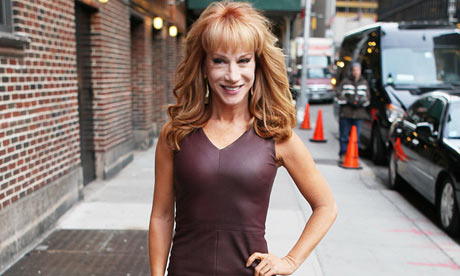
Parents 'fuming' at Kathy Griffin's on-air sexual antics on New Year's Eve

When the US comedian simulated fellatio on her co-host live on CNN, not everyone was amused.
Alexis Petridis, 3.1.13, http://www.guardian.co.uk/lifeandstyle/lostinshowbiz/2013/jan/03/parents-fuming-kathy-griffins-sexual
Comedian Kathy Griffin
Kathy Griffin, whose simulated oral sex didn’t go down well on US TV. Photograph: Jeffrey Ufberg/WireImage
And so to America, where something of a storm appears to have blown up over CNN's live coverage of events in New York's Times Square on New Year's Eve. The programme was considerably enlivened by comedian Kathy Griffin referring to the fiscal cliff as "the fisting cliff", then repeatedly dropping to her knees and pretending to simulate fellatio on her visibly unamused co-host Anderson Cooper: "I'm going down, you know you want to," she told him. "I'm kissing your sardine."
Lost in Showbiz confesses that, at first, it thought this all sounded pretty funny. Indeed, it ruefully reflected that it sounded substantially more entertaining than anything on British TV on the night of 31 December. How much more interesting would Graham Norton's interview with Mary Berry and Paul Hollywood of The Great British Bake Off have been if the Grande Dame of the pithivier and petits fours had taken a leaf out of Griffin's book, suddenly grasped Hollywood's testicles and announced: "I'm tickling your sac"?
That was, of course, until it read the Daily Mail's take on events and was swiftly forced to reconsider. Keen as ever not to create an unnecessary furore, the Mail reported that "Many failed to see the funny side of her antics and branded her behaviour 'vile' and 'putrid'." To underline the seriousness of the offence, it added: "Even the Parents Television Council got involved and is said to be 'fuming'."
Lost In Showbiz must admit that it had never heard of the Parents Television Council, but it was intrigued – mostly by the use of the word "even" in the Mail's report. This suggested that it must be an organisation renowned for its restraint, which would start "fuming" only when faced with the most unbearable provocation. It definitely is not to be confused with, say, The Arnica Network, which recently orchestrated a campaign against the BBC,

Wednesday, 19 December 2012

Tumult over Tweeting Twits Terror

...an alliterative means of raising the issue of arrests, prosecutions and jail terms for tweets and other social network postings!
As many have flagged up, it is arguable that Leveson's lengthy report is rendered farcical and pointless as it essentially pretends the press remains a print medium, ignoring the wider, wilder web. Some incredible cases have been nrought to court offering up a more chilling restriction on the freedom of speech that any of the mild press regulation reforms mooted and hysterically condemned in much of the press, but with comparatively little comment.
Today saw a key announcement by a judge fed up at spurious cases reaching the courts thanks to over-zealous police and CPS. It seeks to tighten up definitions of what is/isn't criminal on Twitter etc - though could still be seen as a frightening restriction on freedoms within a supposedly democratic society. Judge for yourself: http://www.guardian.co.uk/technology/2012/dec/19/twitter-facebook-jokers-prosecution.

Monday, 19 November 2012

STATUTORY PRESS REG pros + cons

This central debate is reflected in many posts on this blog + links lists; I'll look to bring those together here at a later date. For now, this useful argument between a victim of phone hacking and a crime writer opposed to statutory regulation of the press:

Are legal curbs the answer for Britain's errant newspapers?

Lord Justice Leveson is set to deliver his verdict on phone hacking. As politicians and journalists prepare for a battle over possible state regulation of the press, Jacqui Hames, the former Crimewatch presenter and hacking victim, debates the issues with Observer writer Nick Cohen
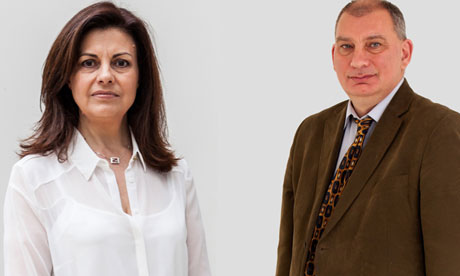
Jacqui Hames and Nick Cohen
Jacqui Hames, former police officer and Crimewatch presenter, and the Observer's Nick Cohen. Photographs: Antonio Olmos and Graham Turner
Dear Nick
I'll start with a bit of background. I'm best known for my stint on Crimewatch, between 1990 and 2006, but my police career started in 1977. I joined the Met at 18 and worked my way up through the ranks, serving as a detective constable until I took early retirement in 2008.
I gave evidence at the Leveson inquiry because in 2002 I was placed under surveillance by the News of the World. Up to that point my experience of the press was generally positive. On Crimewatch I experienced first hand the enormous benefits of working with the media to solve crime. That's not to say there weren't times when the different agendas conflicted, but that has to be expected.
That was all about to change. My then husband, a detective chief superintendent, appeared on Crimewatch to appeal for information in an unsolved murder. It was a gruesome case: a man killed with an axe outside a south London pub.

Friday, 16 November 2012

Press anti-Leveson FLAK (Chomsky concept)

There are many articles you could find which will demonstrate the typically partisan, subjective approach of the bulk of the UK press to Leveson, in the key period between the end of the public hearings and his report, which will recommend how the regulation of UK media should be reformed.
I've copied in just one below, an unusually belicose missive from Grauniad media blogger Roy Greenslade, but it provides specific detail of the flak strategy with specific examples, plus further links.
Flak is one of Chomsky + Herman's five filters within their propaganda model of how the media operate, and to what end (not to inform a citizenry but to reinforce support for elites). You'll find multiple links to Chomsky here and on the prodeval blog.

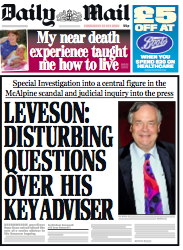
Laughable Daily Mail 'investigation' smears Leveson inquiry assessor

I have been worried about the Daily Mail's editor, Paul Dacre, for some time. After seeing today's issue of his paper, I really think it's time for the men in white coats to visit its Kensington offices as soon as possible.
The Mail devotes 11 full pages, including the whole of the front page, to a "special investigation" into one of the Leveson inquiry assessors, Sir David Bell.
maiIt seeks to present Bell, the former Financial Times chairman, as the spider at the centre of a web of intrigue. In a classic example of conspiracist innuendo, it implies that the "elitist liberal" Bell is covertly exercising influence that somehow threatens the freedom of the press.
He is presented across many thousands of words as some kind of shadowy figure who, through his chairmanships and trusteeships of various charitable bodies, is exerting undue and unaccountable power.
Through a series of leaps of logic and phoney "revelations" of Bell's publicly acknowledged positions, the articles persistently insinuate that he has been up to no good.
He is even accused of being somehow responsible for the Newsnight report which falsely suggested that Lord McAlpine had been guilty of child abuse and, by extension, that he is also part of the reason for the BBC's current crisis, including the resignation of its director-general.
In a leading article, the Mail says its "investigation paints a picture of how a small, intertwined nexus of Left-of-centre individuals – some with links to Ofcom, the media regulator, and virtually all with links to Bell – have sought to exert huge influence on the inquiry."
Clearly, this is a sensitive time to attack a member of Lord Justice Leveson's team, as the editorial admits:
"The Mail is acutely aware of the seriousness of publishing this investigation. We know all too well that our enemies will accuse us of being aggressively defensive in a bid to pre-empt the outcome of the Leveson report, which is due any week now.
But in the light of the scandal engulfing the BBC, we passionately believe in the public's right to know about a senior Leveson assessor's role in it."
So, in order to lend some sensible perspective to this astonishing accusation about Bell's supposed complicity in the BBC's "scandal", let me try to disentangle what amounts to a farrago of distortion with added vilification.

Tuesday, 13 November 2012

BBC: editor-in-chief function examined

I'll maybe add notes to this later, but for now here's a short but very useful analysis of the role thats been much cited in news stories over the Newsnight/Lord MacAlpine scandal: whilst usually referred to the Director General, the BBC's top man on the operating side (and it is a very male-skewed team) is also editor-in-chief. The article below sets out clear arguments why this is important; is typical of large media organisations; looks at the devolved responsibility involved - spot on for exam prep + simply for general understanding!

BBC director general should not be stripped of editor-in-chief role

George Entwistle was not the first BBC chief to fall on his sword for mistakes he had nothing to do with. But the royal charter should not be rewritten in haste during a crisis
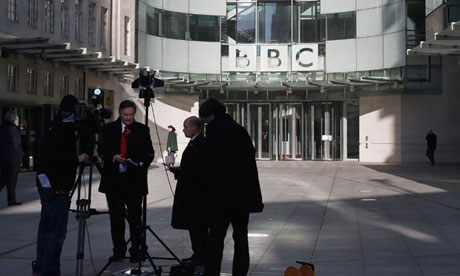
BBC headquaters
A TV crew set up outside BBC headquarters in London following the resignation of George Entwistle as director general. Photograph: Alastair Grant/AP
It is one of the curiosities of the BBC that its director general is also its editor-in-chief. The secondary job title, only ever remembered in moments of crisis, does foster the unhelpful image of the DG spending half their time wandering around the newsroom wearing a green eyeshade, as well as being chief executive of one of the world's biggest broadcasters.
On that basis, it would be an impossible task. The BBC last week said it produced 425,320 hours of TV and radio output last year – or 1,165 hours a day. And then there's the BBC's considerable online output. No director general, however adept or floundering, can manage to watch more than a tiny fraction; Greg Dyke never heard Andrew Gilligan's report at a few minutes past 6am on the Today programme that sparked the "sexed-up" dossier row with Tony Blair's government in 2003. And apparently George Entwistle paid little attention to last Friday's Newsnight.
The BBC Trust chairman, Lord Patten, told Andrew Marr on Sunday morning there might be a case for looking at the editor-in-chief role and the "relationship between director general [and] editorial and creative". But as the dual job title is written into the BBC's royal charter – not due for renewal until 2017 – it is hard to see how it can be changed. Nor should it be.
The corporation's constitution is not to be rewritten by politicians in haste in the aftermath of a crisis; that would amount to interference. Those who want to argue that the BBC is ungovernable may say shedding the job title is only the beginning of a debate on cutting the size of the national broadcaster.
Those familiar with Patten's thinking are saying he does not want to strip out the secondary job title – his BBC Trust has already looked at that – but perhaps move the BBC closer to the model used at ITV, where there is a chief executive, former Royal Mail Group boss Adam Crozier, and a senior editorial figure, director of television, Peter Fincham.
Anyway, editorial responsibility at the BBC is devolved, not least to Helen Boaden, the BBC News director, and then to the editors of individual news programmes, the Six and Ten O'Clock News, Newsnight and Panorama.
It is those editors who have to take day-to-day responsibility for errors as well as running orders – although, as Dyke and Entwistle have found, when a piece of BBC journalism is as flawed as the Newsnight report, it then does become a problem for the person at the top. The devolution is realistic and necessary; no media organisation would function without it.
Rupert Murdoch likes to read and influence the newspapers at the company he part owns and runs. Some describe him, informally, as the editor-in-chief of newspapers such as the Sun. No doubt he too should have known what was going on at the News of the World. Yet even Murdoch would not describe himself as chief executive and editor-in-chief on his business cards, even though his day-to-day input is far greater than a BBC chief's.
But although the editor-in-chief title for the BBC's leader is flawed, it should not be tossed aside because of editorial failings across BBC News. Newsnight's mistakes were not the product of a job title; in the case of the McAlpine misidentification at least, they were the product of basic errors of journalism. Training and common sense are needed to deal with that.

More links?
Odds on who's going to succeed Entwistle - my money is on Ed Richards (if the Tory gov can stomach an ex-Labour man that is)

Thursday, 8 November 2012

+/- Press Reg: gr8 summary:Michael White

His opinion pieces are often ill-fitting these days for Guardian readers, but this is a fantastic resource for the student of media regulation: a summary, packed with further hyperlinked articles, of the press case against strengthened press regulation, and some of the counter-arguments. What he also does here is unpick the extremely anti-democratic nature of billionaire owners who don't even pay UK tax seeking to shape public opinion through 'their' newspapers. I highly recommend reading the full article.

A free press is all very well, but free for whom?

The press lords are lashing out against external regulation, but they ignore several obvious problems
Lord Justice Leveson
Lord Justice Leveson, who is poised to issue his report on regulatory reform of the press. Photograph: Peter Macdiarmid/Getty Images
In today's moment of election excitement from the United States, words like freedom and liberty get thrown around like confetti at a wedding, often by people who seem to think it only applies to those like themselves. The Daily Mail's Richard Littlejohn is furious that the Obama victory was achieved by "fear and loathing", not tactics he would ever use himself.
But away from wall-to-wall election coverage, the Daily Telegraph's "Keep the press free" editorial – it appeared on Tuesday – illustrates the narrow view of liberty too.
What was it about? Lord Justice Leveson is poised to issue his report on regulatory reform of the press in the wake of the disturbing disclosures arising from the phone-hacking affair which led to the closure by Rupert Murdoch – an action cynical and disturbing in itself — of the News of the World in a doomed attempt to save the Dirty Digger's bid for BSkyB.
What provoked the Telegraph's disdain were statements made by the National Union of Journalists in defence of a statutory underpinning – here's a recent exposition of the union's case – for whatever revised form of press regulation emerges from the haggling which will follow Leveson's report, due out later this month. Speaking only for a few working journalists, the NUJ threatens "to sacrifice hard-won freedoms on the altar of leftwing orthodoxy", so the Telegraph assures its readers before urging the union's members to stop sending in their subs.
Well, I stoutly defend the Telegraph's right to write rubbish. But this is poor stuff and would be even if it did not flow from a union-bashing newspaper (does it recognise the NUJ for negotiating purposes? I think not) owned by a pair of elderly property moguls, not locally resident for tax purposes, who have laid waste to the paper's formerly sturdy character.

Tuesday, 23 October 2012

WIDER LAW: LIBEL Frankie Boyle wins £50k damages off Mirror's racist libel

Article URL.

Frankie Boyle wins more than £50,000 libel damages from Daily Mirror

Jury decides comedian was libelled by claims he is a 'racist' and that he was 'forced to quit' BBC show Mock the Week
Frankie Boyle
Frankie Boyle. Photograph: Ian West/PA
The comedian Frankie Boyle has been awarded £54,650 in damages after a high court jury found he had been libelled by the Daily Mirror.
Boyle won £50,400 after the jury's verdict on an article that described him as a "racist comedian". Jurors awarded the comedian a further £4,250 over the claim in the article that he was "forced to quit" the BBC2 show Mock the Week.
The publisher of the Daily Mirror, Mirror Group Newspapers (MGN), must also pay an undisclosed amount of costs.
During the five-day trial before Mr Justice Eady, jurors were shown a string of Boyle's jokes from Mock the Week and his Channel 4 show Tramadol Nights. The Scottish comedian told jurors he used racial language in jokes to ostracise other people's racist attitudes and make a point about society.
Several witnesses, including Boyle's manager and the former production editor of Mock the Week, appeared as witnesses in the case in support of the comedian.
The jury took just under three hours to find in Boyle's favour.
Boyle said on Twitter: "I'm very happy with the jury's decision and their unanimous rejection of the Mirror's allegation that I am a racist. Racism is still a very serious problem in society which is why I've made a point of always being anti-racist in my life and work and that's why I brought this action."
Boyle spent hours in the witness box to explain the frequent use of racial references in his sketches. He denied accusations of using offensive words "gratuitously", telling jurors at one point: "There is no way they are an endorsement of racist terminology. It is the absolute opposite of that. If I dressed up as Godzilla, people would not accuse me of wanting to crush Tokyo myself."
David Sherborne, for Boyle, said it would be "political correctness gone mad" if the comedian was labelled as racist for using racial language in his jokes.
MGN argued the "racist comedian" description in its article, published on 19 July 2011, was either true or honest comment. A barrister representing MGN said if jurors thought that Boyle had been libelled they should show their "contempt" by awarding damages of 45p – the price of a copy of the Daily Mirror.
Boyle said he would donate the damages money to charity.
The trial was one of the only libel cases to be heard before a jury in the past decade. Lawyers have increasingly opted for judge-only trials because of financial and time restrictions.

WIDER LAW: CONTEMPT Mail/Mirror fined (Milly Dowler case))

A good example of how wider law acts as a regulator: both the Mail + Mirror were fined (something the PCC didn't have the power to do, but its successor likely will) £10k each for their reporting on the now-convicted killer of Milly Dowler. Press reportage can be seen to influence jury decisions, so the media are not meant to report on live cases in such a way as to make a fair trial problematic.
As the article notes, there were other recent examples of this: 'In July last year, the Daily Mirror was fined £50,000 and the Sun £18,000 for articles on the arrest of Christopher Jefferies, who was later released without charge, in the Joanna Yates murder case. Vincent Tabak was found guilty of her murder in October 2011.'
This comes in the same month as Frankie Boyle won his libel case against the Mirror (called him a racist), being awarded £50k damages.

Daily Mail and Daily Mirror fined for contempt of court

Newspapers fined £10,000 each over coverage of Levi Bellfield's conviction for the abduction and murder of Milly Dowler
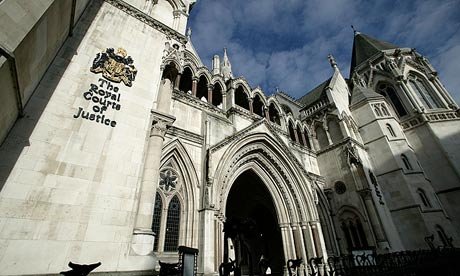
Royal Courts of Justice
The Daily Mail and Daily Mirror have been fined £10,000 each for breaching contempt of court laws. Photograph: Alamy
The Daily Mail and Daily Mirror have been fined £10,000 each, and ordered to pay £25,000 apiece in costs, for breaching contempt of court laws with their coverage of Levi Bellfield's conviction for the abduction and murder of Milly Dowler.
The two newspapers were found guilty of contempt of court in July after two senior judges said their coverage risked serious prejudice to Bellfield's trial.
Sir John Thomas and Mr Justice Tugendhat last week ordered the Daily Mail and Daily Mirror to pay £10,000 each, plus £25,000 apiece in costs.
However, reporting restrictions meant the fines could not be made public until after the verdict in comedian Frankie Boyle's libel trial against the Daily Mirror had been delivered on Monday. Boyle won his case against the Daily Mirror and was awarded more than £50,000 in damages.
The Bellfield articles were published by the Daily Mirror and Daily Mail on the day after his conviction for the murder and abduction of Milly Dowler, while the jury was considering another charge on the attempted kidnapping of Rachel Cowles.
The articles contained background information about Bellfield, which the high court said went far beyond what the jury had been told in court.
The Daily Mirror reported allegations of Bellfield's violent treatment and sexual abuse of his ex-wife and a former partner, and an allegation that he had once boasted of raping a disabled girl.
Sir John Thomas, high court judge and president of the Queen's Bench division, said: "Bearing in mind the amount of costs paid, we can take the course in this case of fining each newspaper at the very bottom end of the scale, namely £10,000 each.
"But for the future the message is clear and the court's observations, we hope, will ensure others exercise the most scrupulous care at the critical time in a case where only some verdicts have been returned and others remain outstanding."
Both the Daily Mirror and Daily Mail expressed surprise and disappointment at the contempt verdict in July.
They questioned whether their coverage had an adverse impact on a jury which had already found Bellfield guilty of two murders.
In July last year, the Daily Mirror was fined £50,000 and the Sun £18,000 for articles on the arrest of Christopher Jefferies, who was later released without charge, in the Joanna Yates murder case. Vincent Tabak was found guilty of her murder in October 2011.

Thursday, 18 October 2012

Ken Clarke's pro-statutory reg arguments

We're not far away now from Lord Leveson's initial findings, but no matter what the outcomes of the Leveson Inquiry you need to be able to outline and critically discuss arguments for and against each form of regulation (statutory, quango, mixed [BBC], industry self-regulation, wider laws, laissez faire non/de-regulation [Desmond/Northern Shell]). Former Justic Sec Ken Clarke's arguments, presented to the Inquiry, are very useful as an example of well-reasoned pro statutory regulation arguments. It seems likely his Conservative government colleagues will oppose any such change, as this clashes with their free market ideology (and political opponents accuse them of being too close to Murdoch still), with PM Cameron and Michael Gove making prominent speeches on this line.

I've copied in below the full article, which has stats from a YouGov poll for Hacked Off which outlines the extremely high level of public distrust of the media and support for statutory regulation (as with any poll its worth asking how well informed the public are in making such judgements), and outlines Clarke's main points and proposals for a much beefed-up PCC-successor with powers to fine and force apologies on any page they wish.

Ken Clarke tells Leveson he supports statutory press regulation

Clarke's remarks come as poll shows overwhelming public support for greater controls despite other ministers' opposition
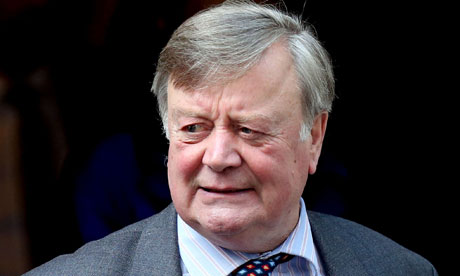
Ken Clarke
Ken Clarke backs a fully independent body capable of imposing fines in a letter to Lord Leveson. Photograph: Steve Parsons/PA
Ken Clarke, the minister without portfolio, has written to Lord Leveson saying he is not opposed to a form of statutory regulation for the press, pointing out that a similar statutory underpinning of the judiciary has not undermined its independence.
Clarke also dismissed those who claim that regulation would amount to Armageddon and backed a fully independent body capable of imposing fines.
His intervention follows sharp warnings by other ministers, including Francis Maude and Michael Gove, opposing any intervention to inhibit press freedom in the wake of the phone-hacking scandal.
Clarke's remarks come as a poll showed overwhelming support for greater controls over the media and widespread distrust over the closeness of politicians to those in the media.

Monday, 1 October 2012

Press/Children - anonymity protecting kids or culprits?

A provocative post from Roy Greenslade in which he takes Education Secretary Michael Gove to task for seeming to contradict his stated opposition to statutory regulation and his passing of new rules which prevent reporting on cases such as this which has been leading the news this past week (about 15 year old Megan and her Maths teacher absconding to France).

A PCC replacement may well revise the PCC Editors Code guidance over reportage of children, but if anything they're likely to make it stricter still. The PCC made much of the changes they made to tighten up the Editors Code on this.

Either way this makes for a useful example: it clearly shows that media regulation extends far beyond the formal regulators themselves - in this case it is the Education Secretary, not the Culture, Media, Sport Secretary enacting this change on press and media regulations.

You can read the full article below, or here on Greenslade's Guardian blog.

Surely freedom loving Gove cannot defend press restrictions?

Here's education secretary Michael Gove speaking to the Leveson inquiry in May this year about regulation of the press:
"I have a prior belief that we should use the existing laws of the land and individuals and institutions should be judged fairly, on the basis of the existing laws of the land… And that the case for regulation needs to be made very strongly before we further curtail liberty."
Gove went on to express what he described as a strong "bias, a prejudice, a predisposition to favour free expression" and spoke out against current libel laws.
It would not be far-fetched to say he was passionate about the cause of press freedom.
From today, however, Gove's department will be seeking to enforce a law that most editors, probably all, believe to be inimical to press freedom.
Under section 13 of the Education Act 2011,

Tele's arguments against statutory press reg

The arguments for statutory press regulation are easy to master and widely expressed. Even if you disagree, you need to present both sides of any argument in this exam (and within academic work generally!) before reasoning which you favour and why.

So, whilst the source (the right-wing broadsheet D.Telegraph) is clearly biased, their arguments cannot be dismissed. You can read the full article (with Roy Greenslade's commentary) here, or click read more below.

Telegraph to Leveson and Cameron: don't undermine press freedom

Today's lengthy Daily Telegraph editorial, The threat to our free press is grave and foolish, appears to betray an increasing nervousness about the coming Leveson inquiry report.
Its strapline, "The growing clamour for press regulation backed by statute threatens a priceless British freedom", either implies some kind of inside knowledge of Lord Justice Leveson's intentions or amounts to a shot across the judge's bows.