Showing posts with label copyright. Show all posts

Friday, 20 November 2015

FAIR USAGE Google to fight takedowns as unfair cop

Huge, huge issue for both regulators and the media companies they regulate: what to do about new media platforms that often undermine established practices and laws, not least copyright law.

For a student seeking hits for their film or video work, or just getting a handle on the complex realities of the modern film or music industries, you need to know the arguments and battles that rage around YouTube and others' practices...

After a series of skirmishes with established media and others the company said it was “offering legal support to a handful of videos that we believe represent clear fair uses which have been subject to DMCA [Digital Millennium Copyright Act] takedowns”. 
Google’s move comes after privacy group Electronic Frontier Foundation successfully defended Stephanie Lenz, a mother whose 29-second video of her son dancing to Prince’s Let’s Go Crazy had been removed from YouTube after Universal Music issued a DMCA notice ordering it to be taken down. 
“With approval of the video creators, we’ll keep the videos live on YouTube in the US, feature them in the YouTube Copyright Center as strong examples of fair use, and cover the cost of any copyright lawsuits brought against them,” Fred von Lohmann, Google’s copyright legal director, wrote on the Google blog.

Google offers legal support to some YouTube users in copyright battles.

Wednesday, 12 August 2015

FILM WEB PIRACY Contrast protest over MPAA with UK ISP Torrent bans

Quite a contrast...

In the US a combination of mass (including street) protest and tech-corporate lobbying (including paying for ads) stymied an attempt, led by Hollywood/MPAA, to make it easy to isolate websites accused of copyright infringement.

Move on 3 years and the likes of Google have swiftly jumped on a new attempt by the MPAA to bring this in by the back door - this time they're focussed on one site, MovieTube, but succeeding in cutting it off would establish the principle.

Here in the UK we have no triple democratic lock (House, Senate, Supreme Court in the US), just a supine Lords to check the power of a Commons which the PM can operate as an "elective dictatorship" (Lord Hailsham's infamous phrase, then attacking a 1970s Labour government) when a single party has an overall majority.

Here, ISPs already block a wide range of websites which serve as search engines for Torrents (a means of linking with multiple users globally to download often copyrighted material).

PM Cameron, to the delight of the likes of the Mail (which loves media regulation or censorship ... just as long as its not of the Press), is pressing ahead with proposals to enforce age ratings on music videos online, to make every online adult to state whether they're opting in or out to adult material (always a difficult definition), and have already enforced a ban on a wide range of adult categories.

Against the backdrop of an overwhelmingly right-wing press, traditionally in favour of conservative, censorial campaigns (so long as it doesn't impact their businesses), there's been little protest here - at least, little that the public might hear about through the mainstream media.


Google, Facebook, Twitter and Yahoo have accused US film studios of attempting to resurrect the Stop Online Piracy Act (Sopa), which was defeated in Congress in 2012. 
The US technology companies joined together to file a brief (pdf) with New York courts urging judges to strike down a preliminary injunction filed by six film studios of the Motion Picture Association of America (MPAA), which calls for a blockade of the alleged piracy site Movietube.  
Sony, Universal, Warner Bros, Disney and Paramount are seeking to remove Movietube from the internet and stop internet companies linking to or providing services to the site, including search engines and social networks. 
“Plaintiffs’ effort to bind the entire Internet to a sweeping preliminary injunction is impermissible. It violates basic principles of due process ... [and] ignores the Digital Millennium Copyright Act (DMCA), which specifically limits the injunctive relief that can be imposed on online service providers in copyright cases,” the technology companies write in the amicus brief. 
They state that they do not condone the use of their services for copyright infringement and that they work with rights holders to tackle issues, but that the “proposed injunction is legally impermissible and would have serious consequences for the entire online community”.

Tuesday, 15 March 2011

Net Neutrality + google and copyright

The regulation of the web is under discussion, with the role of copyright a key issue; see
"David Cameron's 'Google-model' vision for copyright under fire"
and http://www.guardian.co.uk/technology/google for more

The prospect of a 2-speed web, with ISPs choosing what to allow you fast access on (many UK ISPs for example are looking at slowing anyone downloading content from the iPlayer unless the BBC agrees to pay them fees), is growing, leading to debates on 'net neutrality'.

There are many linked stories at the two micro-sites below

Source: http://www.guardian.co.uk/technology/2011/mar/09/isps-outline-stance-net-neutrality
ISPs to outline stance on net neutrality
BT, Sky and Virgin Media to explain 'two-speed internet' policies at summit on net neutrality
  • guardian.co.uk,

  •  
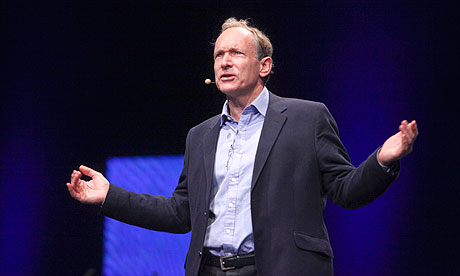
    Sir Tim Berners-Lee
    Web inventor Sir Tim Berners-Lee will attend the gov summit on net neutrality
    BT, Sky and Virgin Media – along with the rest of Britain's leading internet service providers – will next week outline an industry-wide "code of practice" on how they explain controversial "two-speed internet" policies to customers. The group will make their announcement at a ministerial summit on net neutrality chaired by culture minister Ed Vaizey – which will also be attended by Tim Berners-Lee, the founder of the web and a strong supporter of net neutrality – on 16 March. The ISPs plan to publish how they manage internet traffic – such as video viewing, music streaming and movie downloading – in comparison to their rivals. That will make clear if they throttle popular services such as the BBC's iPlayer to maintain capacity for all customers on their network. However, the companies – whose ranks also include the leading mobile operators – will not commit to a minimum service standard, even though some phone companies believe that "there should be a basic commitment to let people browse everything on the internet". The agreement follows a wide-ranging debate on "net neutrality" – whether ISPs should be allowed to charge content companies such as the BBC or Google for faster delivery to the nation's homes. BT, TalkTalk and others argue that ISPs should be free to strike deals for more efficient delivery. Under the plans, described as a "voluntary code of conduct" by people at the meeting, ISPs will be compelled to publish a "scorecard" of how they speed up and slow down traffic and for which companies. But internet providers will still be allowed to throttle public access to video and peer-to-peer services if they wish. The Broadband Stakeholders Group, which has been facilitating meetings with ISPs on traffic management since late last year, will publish a statement shortly after the meeting. ISPs hope the move will head off an enforced code of practice by the communications regulator Ofcom. Most ISPs manage traffic at peak times to enable faster speeds for their customers. The BBC has been in fights with ISPs over the amount of bandwidth used to stream its iPlayer service. In November, the corporation said it would introduce a "traffic light system" on the iPlayer, so that viewers could say whether their connection was being slowed down by providers. Mark Thompson, the BBC director general, publicly intervened in the net neutrality debate in January, saying an internet "fast lane" could undermine the corporation's responsibility to deliver programming to the nation's homes. "As the web becomes a vehicle for the transport of richer and richer content, the question of whether all content from all providers is treated equally by the networks becomes ever sharper," he said.

Thursday, 3 February 2011

EU law TV copyright: Pub landlady defeats Murdoch?

Incredible story emerging that could impact every media industry; see http://www.guardian.co.uk/media/2011/feb/03/eu-law-sports-rights

Pub landlady's EU case paves way for Premier League rights revolution

Venues showing live Premier League matches from foreign broadcasters are not breaking EU law, court advised

Read the recommendation in full (pdf)
  • guardian.co.uk,
  • Article history

  • Manchester United fans watch football in a pub
    Manchester United fans watch football in a pub. Photograph: Gary Calton The European Union's highest court was today advised to rule that EU law does not prohibit pubs showing live Premier League matches from foreign broadcasters, potentially sparking a revolution in the way media sports rights are sold across the continent. Juliane Kokott, one of the eight advocate generals of the European court of justice, gave her view on a landmark case brought by Karen Murphy, landlady of the Red, White and Blue pub in Portsmouth. Murphy uses a Greek decoder card to show live Premier League matches at much cheaper rates than BSkyB charges commercial premises in the UK.