Showing posts with label BSkyB. Show all posts

Thursday, 18 May 2017

Murdoch's Sky bid at risk from US abuse lawsuits

A good example of how regulation is often shaped or at least influenced by agencies beyond the formal regulators.

Since the 2nd Royal Commission on the Press, there has been a legal requirement for the government to approve ANY takeover of a newspaper, though that this was and is a token gesture to see off pressure for tougher regulation is reflected in the fact that not one such sale has ever been rejected. Indeed, recently published archives of then PM Thatcher's secretive meetings with Murdoch as he successfully sought to takeover The Times newspapers in the early 1980s suggests that ideologically friendly governments are prepared to help powerful press barons bend or break the law to have supportive media voices in place.

Rules on TV ownership have been tough from the start. There has been considerable deregulation, especially under Blair's 'New' Labour government, been there remain limits on what any individual company or media magnate can own. Murdoch is bidding is buy up the remaining 61% of BSkyB shares he doesn't own, but must get OfCom's agreement that this will not cause competition issues in the UK market AND that he, his sons and his scandal hit corporation, facing multiple lawsuits for sexual abuse and racial discrimination in the US, constitute a 'fit and proper' owner.

He abandoned his 2011 bid to do the same once the phone hacking scandal hit big over the Milly Fowler case, leading to his closing the NoTW. Will he be forced to back down AGAIN after another big scandal?

Probably not.

Saturday, 19 December 2015

Murdoch power continues, so much for Leveson

Write off ol' Rupe at your peril. His power and influence over UK government policy would seem as strong as ever, and this article hints that he may be behind the savage attack on BBC funding, and therefore its very future, by the Tory government.

He continues to meet with the PM, Chancellor and Culture Secretary despite being disgraced by revelations from the Leveson Inquiry. A renewed bid to fully takeover Sky seems likely given the rather blatant favour he's shown by his ideological allies, a repeat of his 80s tie to Thatcherism.

Thursday, 19 November 2015

OfCom Sky Sports - sunny prospects after deregulation

Slightly curious logic to this OfCom ruling, with BT still pursuing legal action against Sky and the government attack on the BBC ensuring its no longer a serious competitor for sports rights.

Monday, 6 July 2015

BBC Independence 'myth' in tatters?

There have been so many, wholly predictable (I did just that before the election!), big news stories about the free market/small state Tory attack on the publicly funded BBC that I've been waiting for something concrete before blogging on this again.

In the space of a week we have the story that the PM threatened to shut down the BBC, angered at what he saw as liberal/leftie bias, and Chancellor George Osbourne very bluntly questioning the future of the BBC in its current guise and scope.

Today comes action which ties together all the speculation over what Tory hostility might mean in practice. With a Culture Secretary outspoken on his attacks on the BBC before the election it comes as little shock that the Beeb has just meekly accepted an extraordinary funding cut just days after confirming the closure of BBC3 and announcing many 1000s more job cuts were planned.

Providing free licences for the over 75s is an instant cut of 20% of the budget. TWENTY percent!

Sunday, 19 April 2015

LIBEL LAW Sky's the limit as Scientology wins 2nd UK battle


2013 LIBEL REFORMS UNDONE BY NOT APPLYING IN NORTHERN IRELAND?
IN A NUTSHELL: The Church of Scientology has successfully used libel law, reformed in England, Scotland and Wales but not Northern Ireland, to intimidate Sky, who opted to abandon a broadcast of a film critical of the 'church' rather than face expensive legal proceedings. They don't have the technical ability to separate the signal to ensure the film wouldn't be broadcast in Northern Ireland, so the 2013 libel reforms, designed to stop 'libel tourism' and abuses of super-injunctions by the likes of Trafigura, seem to have been rendered null.Another good example of why we need to look beyond the formal regulators to laws as well.


In its goal of preventing a broadcast of Going Clear in the UK, the church has an unlikely ally in Northern Ireland’s libel laws. The 2013 Defamation Act set out a new defence for public-interest journalism on the British mainland: that the plaintiff has to show “serious harm” has been done to it. 

Thursday, 8 November 2012

+/- Press Reg: gr8 summary:Michael White

His opinion pieces are often ill-fitting these days for Guardian readers, but this is a fantastic resource for the student of media regulation: a summary, packed with further hyperlinked articles, of the press case against strengthened press regulation, and some of the counter-arguments. What he also does here is unpick the extremely anti-democratic nature of billionaire owners who don't even pay UK tax seeking to shape public opinion through 'their' newspapers. I highly recommend reading the full article.

A free press is all very well, but free for whom?

The press lords are lashing out against external regulation, but they ignore several obvious problems
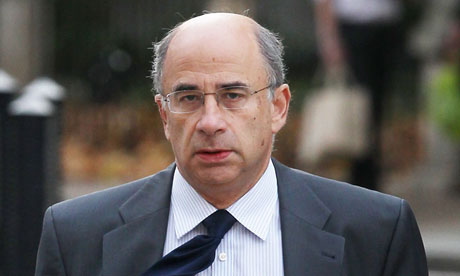
Lord Justice Leveson
Lord Justice Leveson, who is poised to issue his report on regulatory reform of the press. Photograph: Peter Macdiarmid/Getty Images
In today's moment of election excitement from the United States, words like freedom and liberty get thrown around like confetti at a wedding, often by people who seem to think it only applies to those like themselves. The Daily Mail's Richard Littlejohn is furious that the Obama victory was achieved by "fear and loathing", not tactics he would ever use himself.
But away from wall-to-wall election coverage, the Daily Telegraph's "Keep the press free" editorial – it appeared on Tuesday – illustrates the narrow view of liberty too.
What was it about? Lord Justice Leveson is poised to issue his report on regulatory reform of the press in the wake of the disturbing disclosures arising from the phone-hacking affair which led to the closure by Rupert Murdoch – an action cynical and disturbing in itself — of the News of the World in a doomed attempt to save the Dirty Digger's bid for BSkyB.
What provoked the Telegraph's disdain were statements made by the National Union of Journalists in defence of a statutory underpinning – here's a recent exposition of the union's case – for whatever revised form of press regulation emerges from the haggling which will follow Leveson's report, due out later this month. Speaking only for a few working journalists, the NUJ threatens "to sacrifice hard-won freedoms on the altar of leftwing orthodoxy", so the Telegraph assures its readers before urging the union's members to stop sending in their subs.
Well, I stoutly defend the Telegraph's right to write rubbish. But this is poor stuff and would be even if it did not flow from a union-bashing newspaper (does it recognise the NUJ for negotiating purposes? I think not) owned by a pair of elderly property moguls, not locally resident for tax purposes, who have laid waste to the paper's formerly sturdy character.

Friday, 6 April 2012

Sky email hacking: Public Interest Defence

The following is an example of how you can combine Use of Examples (a case study of this instance of hacking), EAA + Use of Terminology (in analysing the pros/cons of the concept of 'public interest defence', and citing specific law which may overrule this: the Computer Misuse Act). Below you'll find differing lines from Sky, Guardian, Indie, Hacked Off and Reuters, plus a linked Roy Greenslade article on the wider concept.
Huge story breaking 1st week of April 2012: Sky has admitted to using email hacking for at least two stories it ran ... but claims there is a public interest defence. Sky trumpeted about 'obtaining' emails from the faked-death John Darwin in 2008; his wife pocketed a fortune from life insurance and they went to Panama to live it up (then rather foolishly posed for pictures with an estate agent).
Here's how The Guardian broke the story. An excerpt:
Making only a minimal effort to hide the basis of the story, Tubb's report said Sky News had "discovered an email" from John to Anne dated 31 May 2007, in which he says changes to visa regulations meant he could no longer stay in Panama, where he was hiding on a tourist visa. The report cited evidence from several emails between the couple, including a "final email" from Anne that was not, "as suggested in court", evidence of a "massive row" between them, an email that Tubb said had been "handed to the police by Sky News".
The story displayed a picture of "John and Anne Darwin's masterplan", showing a detailed diagram that had apparently been produced by Darwin, and claimed to have obtained detailed financial accounts prepared by Darwin. In another story, published in November 2009, Tubb quoted directly from an email written by John Darwin to his wife in 2007, explaining that their property in Panama had been valued at $1m and adding: "You're a filthy rich gringo". But a link to copies of the couple's emails is now dead.
The broadcaster also published a voicemail message on its website, dated 19 May 2007, in which Anne Darwin is clearly heard leaving a message for her husband. The voicemail, part of an interactive graphic, ends with her saying "I'll try and catch you tomorrow. Love you," which the broadcaster said showed "she was doing as much of the running as he was".
Sky News said this was not obtained by phone hacking and a spokesman said: "All of the material obtained by Sky News was via the Darwins' computer-based email accounts. As we have said previously, Cleveland Police were made aware of the source of the material when Sky News shared it with them. We stand by our editorial decisions, which were justified in the public interest."
Sky News responded today by accusing the paper of double standards; here's an excerpt:
Some of the most important stories have involved breaking the rules in some way. For example, the Daily Telegraph's exposé of the MPs' expenses scandal was very clearly in the public interest, but only happened because the newspaper took the decision to pay for stolen data. They have been widely applauded - deservedly - for doing so.
Indeed, if it was looking for further examples, the Guardian could have found them much closer to home. Its respected investigative reporter David Leigh has admitted hacking a phone in pursuit of a story. The Guardian's sister paper, the Observer, was found on more than 100 occasions to have commissioned information from a notorious private investigator, who was convicted in 2006 of illegally obtaining private data. In each case, a public interest justification has been claimed.
The story has lead headlines for days now. The Indie was one of several to flag up a key point of law which potentially undermines Sky's line that there was a public interest defence:
Although no one has been arrested for the computer hacking, there is no public interest defence in the Computer Misuse Act. The development follows the revelation that The Times, another part of the Murdoch news operation, was found to have hacked into the emails of the blogger Nightjack, who the paper outed as the serving police officer Richard Horton.
“Hacked Off today renews its calls for a public interest defence in law after Sky News confessed to hacking into emails, claiming it did so ‘in the public interest’.
“Yet because there is no public interest defence in law for the Computer Misuse Act, Sky has to rely on the discretion of the prosecution services not to prosecute.
“This is unsatisfactory. If Sky News believes there is a clear public interest to hack into emails then it should have a clear and consistent legal defence for its actions.
“Journalists would feel confident to speak openly about the methods they use to discover stories in the public interest if they knew there was a proper defence for their actions in law.
“Hacked Off hopes that the Leveson Inquiry will recommend the introduction of a formal public interest defence in law for the protection of journalism.”
If you want an ostensibly neutral (I don't think such a thing exists) news source, here's how news agency Reuters reported the story.

Final word from me on this: NewsCorp has been guilty of flagrant abuse, and intrusions into the privacy of 1000s, but don't dismiss Sky's line of argument just because the source is arguably tainted; consider the merits of the argument, not just the source. Read more on the public interest defence in this book extract from the Roy Greenslade column.

Thursday, 3 February 2011

EU law TV copyright: Pub landlady defeats Murdoch?

Incredible story emerging that could impact every media industry; see http://www.guardian.co.uk/media/2011/feb/03/eu-law-sports-rights

Pub landlady's EU case paves way for Premier League rights revolution

Venues showing live Premier League matches from foreign broadcasters are not breaking EU law, court advised

Read the recommendation in full (pdf)
  • guardian.co.uk,
  • Article history

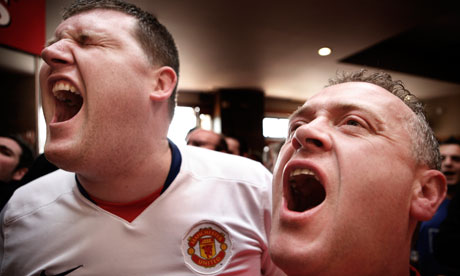
  • Manchester United fans watch football in a pub
    Manchester United fans watch football in a pub. Photograph: Gary Calton The European Union's highest court was today advised to rule that EU law does not prohibit pubs showing live Premier League matches from foreign broadcasters, potentially sparking a revolution in the way media sports rights are sold across the continent. Juliane Kokott, one of the eight advocate generals of the European court of justice, gave her view on a landmark case brought by Karen Murphy, landlady of the Red, White and Blue pub in Portsmouth. Murphy uses a Greek decoder card to show live Premier League matches at much cheaper rates than BSkyB charges commercial premises in the UK.