Showing posts with label fourth estate. Show all posts

Tuesday, 7 April 2015

THEORY Fourth Estate, Public Sphere defined

TBC
Basic stuff, but useful - and indeed fundamental.

IN A NUTSHELL:
With clergy/religious institutions, nobility and 'commoners' the classic 'three estates of the realm', the media (originally the press of course) began being referred to as a fourth estate, independent from and tasked with ensuring a proper scrutiny (and flow of information to and on behalf of the public) of the three estates. Edmund Burke is widely credited with coining the term in 1787 during a debate in the House of Commons ... on the commencement of press reporting on parliament.
Here's Hearns-Branaman's (2011) summary:
The Fourth Estate encapsulates many of the important ideas of the Enlightenment,especially that democracies need to be fuelled by a well informed public whothemselves are the source for the power and legitimacy of the government.

Sunday, 29 March 2015

Preston on IPSO + RIPA, Leveson trapping free press

As I've said before, I treat Peter Preston's columns with caution, but this is a very useful piece not just as an expression of doubt over IPSO (some praise too), but on government moves that are stymying the free press. Like Greenslade, he sharply condemns the Met and CPS for bringing the court cases against Sun journalists, once more thrown out by a jury recently.

The key point really is how he sees the government, and political Establishment generally, as having engineered an extraordinary attack on press freedom, one which he likens to Burma! 

Here's an excerpt:
Moses is toiling intelligently to find common ground. Let’s hope he succeeds. But note how the creeping mantra of privacy prevents inquiry – except by the state. See how journalists can be threatened on the flimsiest of “misconduct in public office” grounds. Watch for whatever government we get next to start pondering “action”.

Thursday, 5 June 2014

Secret Terror Trial = end of Fourth Estate?

There are various terms used below: fourth estate, public sphere, superinjunction, statutory regulation, concentration of ownership, liberal pluralism, Marxist critique: (Chomsky's) propaganda model, hegemonic, free market, web 2.0.

The media are regulated because (a) they are seen as having profound influence on social psychology, values and attitudes and (b) because they are seen as a basic, fundamental part of a functioning democracy. Of course, the democratic function leads some to argue that we shouldn't regulate the media - or, more specifically, that the government shouldn't have a role in this; this is a key argument used against tougher, statutory regulation of the press.

June 2014 sees news emerging of a criminal trial which the media were originally banned from reporting on, including on its very existence. The very concept of a fourth estate (or free press, where press doesn't just mean newspapers) is based on the idea that the media will hold governments and big business to account, and expose any corruption, improper or antidemocratic practices.

Friday, 18 May 2012

Prescott says Twitter stronger than PCC

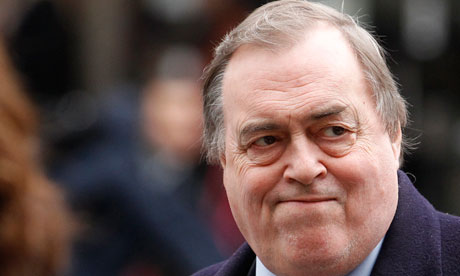
The post title doesn't quite sum up former Labour deputy-PM John Prescott's argument, which is a very, very useful one as it
  • brings up issues around digitisation ...
  • and the decline of newspaper circulation (there are 10m UK Twitter accounts, while 9m papers are sold each day)
  • the failures of the PCC, and how Twitter users are more effective than it: he compares his experience of complaining about a Photoshopped image used to brand him as a 'champagne socialist' (he was drinking a bottle of beer which was cropped out of the shot) - it took weeks to get an apology - with a June 2011 story in The Sunday Times about him criticising new Labour leader Miliband: he tweeted that this was simply a made-up lie, and within HOURS The Sunday Times issued an apology
  • the failure of the press to carry out its democratic function as a 'fourth estate'
  • ...not least over the refusal of the press to report the Guardian's revelations about phone hacking until after the Milly Dowler revelations led to the closure of the NoTW - he says it was the incessant discussion of this on Twitter that ensured the Guardian's reporting eventually had an impact
  • he also notes the role of advertisers: it was after a growing number of big-name companies announced they would cease advertising in the NoTW that it was closed
  • fundamentally, he argues that Twitter enables the people to carry out the scrutinising role, holding politicians to account, that the press/media are traditonally meant to
Here's what he said on http://www.guardian.co.uk/politics/2012/may/15/life-is-tweet-john-prescott:

Life is tweet, says John Prescott, as Twitter reaches 10m milestone in UK

Twitter has helped shift the balance of media power from press barons to the people – a true champagne moment
John Prescott
John Prescott says the 10,000,000th UK Twitter subscriber is a milestone and a true champagne moment. Photograph: Andrew Winning/Reuters
Tuesday marked a turning point for the UK mainstream media. The combined total of people who buy daily national newspapers is 9,002,963. The number of people on Twitter in the UK is now 10 million.
Where once press barons were courted by politicians and PRs, the people have now established their own media. It costs nothing, is faster than mainstream media and galvanises people into action.
Back in 1996, I went to a do with Pauline. A photographer took a picture of us at our table. The following day the London Evening Standard ran a picture with the caption "champagne socialist".
There was no bottle of champagne at our table – the paper had cropped the picture to make a bottle of Becks look like a bottle of Moët. Another beer near my hand was airbrushed out completely.
I complained but, after a few days, I'd heard nothing. So I released a statement which was published in the Independent and, eventually after weeks, I received an apology from the Standard.
In June 2011, the Sunday Times wrongly reported I had told "friends" that my party's new leader had not made "a good start" to his leadership. The headline read "Labour Big Beasts Maul Ed Miliband".
I tweeted: "I see there's a quote purporting to be from me in the Sunday Times. It's completely made up. An absolute lie."
Within an hour, the paper replied "Due to a prod[uction] error a quote was wrongly attributed to @johnprescott. We apologise for the confusion & are happy to set the record straight."
Both stories illustrate how power in the media has shifted dramatically. Twitter has created an important and speedy check on our newspapers – a role the Press Complaints Commission (PCC) failed miserably to fulfil – and finally made press barons accountable to the people.
Even Rupert Murdoch, who vented his spleen in Sun editorials, realised the power shift and cut out the middleman by finally joining Twitter in January.
The Jan Moir Twitter storm about her terrible Daily Mail piece on Stephen Gately's "sleazy" death led to thousands of tweeters, myself included, posting the link to officially complain to the PCC. A record 25,000 did and Moir was forced to apologise.
Twitter users also bombarded News of the World's advertisers after accusations it had hacked Milly Dowler's phone. O2, Boots, Halifax, Dixons, Sainsbury's, the Co-op, npower and Ford all withdrew their advertising and the paper was closed within a week.
Social media also helped set up the Leveson inquiry. While very few media outlets covered the Guardian's original phone-hacking investigations in 2009 in any detail, it was kept alive on Twitter as new information emerged.
They wouldn't let it lie and the mainstream media were ultimately compelled to investigate the story, leading to a critical mass of public anger and official action.
Twitter is OUR media, the public have become the news editors and the Twitter trend list is the running order.
It's given me a voice and a connection to millions of people that the distorted prism of the mainstream media denied.
So for me, life is tweet. Though it would be even tweeter if they verified me.
LOL!
John Prescott is the former deputy prime minister. He joined Twitter on 22 January 2009 and presently has almost 132,000 followers.

Monday, 30 April 2012

Free market = free press?

We'll say much more about this, and you can already read MUCH more in the pack you got before Easter.
Remember, the basic point is that a so-called 'free market' is linked in with the concept of a 'free press'. In both cases they are defined as free from government interference/regulation. The events of 1694 (ending press licensing) and 1851 (scrapping stamp duty) are seen as creating a free press by marking the end of government interference. C&S argue this is simply tosh, but it remains a hugely influential factor in the light-touch, laissez faire regulation of the press today. RCP1's explicit statement is a very useful quote (and we'll see that the 1985 Peacock Committee (on TV) argued that the free market-created free press was a good model for broadcast regulation):
free enterprise is a prerequisite of a free press

A free market, in theory, produces a press industry which is:
  • diverse: reflects the range of opinions held by the public
  • competitive: in contrast to state monopoly, a free market ensures we get a wide number of competitors in newspaper publication
  • democratic, fourth estate: free from political control, the press exists to hold politicians and public servants to account. No issue with proprietorial intervention
This is plainly not the case. RCP1 noted this, but felt that the free market would reassert itself after the necessary state intervention during WW2 had ended. RCP2 noted the failure of the free market to correct the issues RCP1 highlighted; there was a continuing (1) lack of diversity (2) concentration of ownership (by 1961 just 3 conglomerates controlled 89% of circulation) (3) long before Murdoch invented The Sun and radically dumbed down the entire press, press standards were poor on many counts, leading to a 2nd regulator. C&S argue that advertisers were given a de facto licensing power, helping ensure a right-wing view dominated, while the notorious era of the press barons seems not to be a historical footnote given what we continue to learn about Murdoch and his access to political power.

When we study broadcast media regulation, we'll see a clear long-term trend towards deregulation, with the BBC a partial exception...