Showing posts with label Peter Preston. Show all posts

Sunday, 26 November 2017

CHOMSKY ADVERTISER FILTER Stop Funding Hate D Mail campaign

FEB 2018 UPDATE: The campaign continues to have traction, an interesting reversal of the history of left-wing papers struggling to gain advertising. Not that we can say the Mail is struggling yet, other than with the general disruption of digitisation, with the online migration of advertising.
The campaign got multiple replies from advertisers pledging to cease placing ads in the Mail after tweeting about a Richard Littlejohn column condemning two gay dads, including celebrity swimmer Tom Daley.

SFH aims to reduce what it sees as the baleful, malevolent influence over UK democracy (such as it is) and public opinion by pressuring advertisers with potential boycotts.
Peter Preston here recalls how left-wing reportage was discouraged through government encouraging advertisers to withdraw from newspapers that were critical of government 'defence' (ie, war!) policy, specifically the Suez crisis.
He develops a valid point - though once more here we can see the potential for social media and we media to have a greater impact on the poor practices of the press industry than the self-reliant IPSO.

Sunday, 6 March 2016

BBC OfCom switch boosts political control?

Peter Preston, Guardian grandee, provides a solid run through of the issues around political appointments to PSB broadcasters boards (he notes an experienced privatising executive has just been appointed to C4 as lobby briefings make it clear the Tories want to sell off C4, this isn't just a BBC issue), including some historical examples.

Sunday, 24 January 2016

IMPRESS signs up obscure titles but could grab power

IN THIS POST: Peter Preston savages Impress' credentials and strategy; despite only signing up 4 micro-local titles they could bring about statutory powers that include draconian fees for newspapers whether they have signed up to Impress or not. You'll find further Impress resources at the bottom of this post. Read more on press regulation on the Media Guardian here.

Impress boast of their actually humble beginnings. Note the new domain: http://impress.press/
Peter Preston's weekly column is mostly on the Saville case, and is useful for highlighting the consequences of the incessant political pressure on the Beeb.

However, its the fiery, furious final two paragraphs that grabbed my attention, coming to a conclusion that hadn't occurred to me. Greenslade had reported that Impress was to announce its initial sign-ups, but when this proved not to be the IPSO refuseniks like The Guardian I switched off.
Preston flags up that despite the absurdity of Impress' starting slate, four micro-local titles, this could see the severe powers to fine newspapers, whether signed up or not, heavy amounts. In his own words:

Saturday, 1 August 2015

D-notice: the unseen hand of government censorship

I've cited this a few times before, but its worth looking at individually - a great example of the often arcane nature of official censorship in the UK, bypassing the voluntary self-regulation system.


Peter Preston defends the system as great value at £250k a year: D-Notices: the best security show in town at a bargain price.

Greenslade's history of the D-Notice
The D-notice system is a peculiarly British arrangement, a sort of not quite public yet not quite secret arrangement between government and media in order to ensure that journalists do not endanger national security. 
In his official history of the system*, a former D-notice committee chairman, retired Rear Admiral Nicholas Wilkinson, explained that it “emerged amorphously across three decades of increasing concern about army and navy operations being compromised by reports in the British (and sometimes foreign) press.” 
It was finally created in 1912 in the runup to the first world war, when the fiercely anti-German press barons of the era were only too happy to prevent the enemy from accessing useful intelligence. 
At the outset, therefore, it was largely viewed as a sensible and pragmatic arrangement that did not inhibit press freedom. Editors and journalists appear to have accepted it without demur up to and including the second world war, when self-censorship was the order of the day for Britain’s press. 
The first major controversy occurred during Harold Wilson’s administration, in 1967, in what became known as the D-notice affair, thus bringing the system’s existence to wider public attention for the first time. 
Wilson accused the Daily Express and its defence correspondent, Chapman Pincher, of ignoring D-notices by revealing that the secret services were scrutinising thousands of private cables and telegrams sent from Britain without obtaining the necessary Official Secrets Act warrant. 
The prime minister called for an inquiry and set up a tribunal to decide whether Pincher had breached the system. It prompted the Daily Mirror editor, Lee Howard, to resign amid mutterings of censorship. Then, to Wilson’s embarrassment, the tribunal cleared the Express. 
But the effect of this affair had far-reaching implications. Editors were bolstered by the fact that the tribunal had underlined the voluntary nature of the system. Governments became hesitant about being overly heavy-handed about using D-notices to prevent publication that could be shown to be in the public interest. 
Four years after the Wilson fiasco, all existing D-notices were cancelled and replaced by what were called “standing D-notices”, which gave general guidance on what might be published and what should be discouraged.  
The fact that such notices were recommendations to editors, without any legal status, resulted in them being renamed in 1993 as DA (defence advisory) notices. 
One of the interesting features of the system has been the press-friendly nature of several of the officials chosen to head the committees, former senior servicemen such as Wilkinson and Colonel Sammy Lohan. 
And it is truly ironic that Wilkinson’s history was itself subjected to censorship. Five chapters had to be excised prior to publication in 2009 after Whitehall officials invoked a rule that official histories should not include matters concerning the administration in power. It is being republished with new chapters this month. Famously, editors have also got away with bypassing the D-notice system altogether by refusing to alert the committee to stories they feared might lead to injunctions. 
The Observer kept secret its 2004 revelation about a memo showing Britain helped the US conduct a secret and potentially illegal spying operation at the UNin the runup to the Iraq war.  
The result? An almost identical system but a change of name: DA-notices become DSMA (Defence and Security Media Advisory) notices. Nothing, it seems, works quite so well as a British fudge that allows the press to keep its freedom while volunteering to protect national security. 
* Secrecy and the Media: the Official History of the United Kingdom’s D-Notice System by Nicholas Wilkinson (Routledge, 2009)


Preston's reflections on the D-Notice system and changes
D-Notices, now called DA-Notices, have been around for more than 100 years – and still many people, including a prime minister waving them in the wake of Edward Snowden, remain grumpily ignorant of what they’re really about. Perhaps changing the name to National Security Notices (as just recommended by a review committee) will help Mr Cameron concentrate.
The notices are not censorship with Whitehall bovver boots. They’re an extremely light-touch, voluntary system that helps press people – often at local level – who think they may have stumbled on a story make sure they don’t sprawl full length by inadvertently reporting something that endangers British security. You ring up an amiable retired air vice-marshal in the Ministry of Defence who checks around and tells you where and if peril lies. A committee of editors and civil servants meets twice a year to monitor and discuss.
And that, essentially, is what will happen post-review too, with a few tweaks and modernisations – plus one economy to lighten George Osborne’s load. The whole apparatus, operating 24/7, costs around £250,000 a year, a bargain basement safety net. And what would happen if the system didn’t exist? More press calls to M15, who employ three staff officers to deal with media inquiries. More calls to M16, with two press officers. More to GCHQ, now with a press office and expert manager. More to the phone-answering legions of the MoD, Cabinet Office and Home Office.
I was interested to sit on the review, fascinated by the different attitudes, from draconian to complaisant, different departments of state manifested; and happy to discover the cheapest effective security show in town (or probably anywhere). Every little helps, prime minister.

Sunday, 12 April 2015

DIGITISATION OWNERSHIP Preston on online polls opposing non-dom owners

In short, [there] is no single, ideal model of press ownership anywhere in the world, particularly in an era of profound flux. Any prospective government policy is going to be out of date before it’s sealed: see the way Leveson couldn’t cope with online.
Preston raises an opinion poll that shows overwhelming support for tougher media regulation, specifically restricting the right of non-doms to own British media. Whilst acknowledging the principle behind this, he questions whether this sentiment has any meaning given the globalisation that digitisation has brought about.

He starts:

Sunday, 29 March 2015

Preston on IPSO + RIPA, Leveson trapping free press

As I've said before, I treat Peter Preston's columns with caution, but this is a very useful piece not just as an expression of doubt over IPSO (some praise too), but on government moves that are stymying the free press. Like Greenslade, he sharply condemns the Met and CPS for bringing the court cases against Sun journalists, once more thrown out by a jury recently.

The key point really is how he sees the government, and political Establishment generally, as having engineered an extraordinary attack on press freedom, one which he likens to Burma! 

Here's an excerpt:
Moses is toiling intelligently to find common ground. Let’s hope he succeeds. But note how the creeping mantra of privacy prevents inquiry – except by the state. See how journalists can be threatened on the flimsiest of “misconduct in public office” grounds. Watch for whatever government we get next to start pondering “action”.

Monday, 30 April 2012

Regulators too close to politicians?

Unlike Roy Greenslade, I wouldn't strongly recommend Peter Preston as a source, but he is a senior journalist (and ex-editor of Guardian) and has written many interesting, insightful articles on this ongoing saga of media regulation, Hackgate and Leveson.

Series: Peter Preston on press and broadcasting

Here's one which is particularly useful; OfCom Chief Ed Richards is seen by the Tories as a Labour place-man ... one example of the arguable closeness between regulators and politicians. In this article, Preston tackles this issue:

The great and good shall inherit the media regulators
All the watchdogs seem to be led by ex-politicians or mandarins. Many of them do a splendid job – but are they really independent of government?
Leveson Inquiry
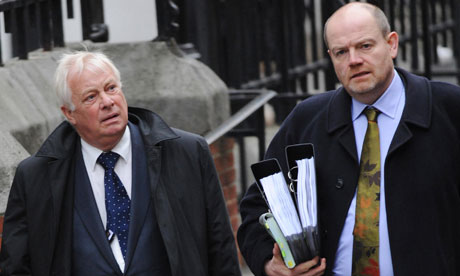
The career of Lord Patten, above left arriving at the Leveson inquiry with BBC director-general Mark Thompson, has been underpinned by his life as a Tory MP, minister and party chairman. Photograph: Stefan Rousseau/PA

The word of the moment is "independent", signalling a wondrous purity of heart and intent. But watch lead counsel at the Leveson inquiry curl a sardonic lip when told that prospective members of a self-regulatory press body (ie, the PCC) can be asked if they believe in self-regulation before they are appointed. Independence or built-in bias? And here comes Ed Richards, chief executive of Ofcom, laying out the basic requirements of his business: "Independence of political influence, independence from those regulated in governance and decision-making and clear, transparent processes" (among other necessary virtues). Now scratch your head.
If you have read Lord Rees-Mogg's autobiography, you may remember a scene where Sir Ian Trethowan, Tory-friendly BBC director-general, asks William to be the new deputy chairman of his governors. No, says Mogg, it's chairman or nothing, and off Trethowan trots to consult with the Iron Lady – who privately promises Mogg the top job once the then chairman, George Howard, packs up. Fortunately for William, the Arts Council slides his way before Howard's term ends, so the private pledge isn't redeemed. But ponder that episode on the Richards or Leveson sanctity scale. Transparency? Independence of political influence?
Of course, things have changed since 1983. The committee on standards in public life has given the whole appointments scene a dusting. But it's still interesting to examine the candidates who receive a final nod. Chris (now Lord) Patten, chairman of the BBC Trust: a man of many jobs and talents, but the underpinning of them all is his previous life as a Conservative MP, minister, then party chairman. Richards himself: former senior policy adviser to Tony Blair, plucked from No 10 as the great governance game rolled on. And remember whom Ed succeeded at Ofcom: Stephen Carter, transferred to Downing Street by Gordon Brown as chief of strategy before becoming Labour's minister for broadband dreams (and member of the Lords). Sir Michael Lyons, Patten's (Labour-appointed) predecessor at the BBC Trust, had been a Labour councillor. Gavyn Davies, last chair of the (doomed) BBC governors, spent long evenings waiting for his wife to come home from running Gordon Brown's office in the Treasury.
Over at ITV, you'll find Archie Norman, ex-Asda, ex-Tory MP, at the helm. At Channel 4, Lord (Terry) Burns, most ubiquitous of retired civil servants. At the Advertising Standards Authority, Lord (Chris) Smith, once Labour's arts minister. At a PCC striving for survival, Lord Hunt, former Tory cabinet minister, who succeeded Baroness Buscombe, former Tory frontbencher in the Lords, who succeeded Sir Christopher Meyer, once No 10 spokesman for John Major, who succeeded Lord Wakeham, the grandest of Tory fixers.
Is there a pattern here? Of course. Not one, for the avoidance of doubt, in which any of the named above are political puppets. They sometimes (see Davies) walked the plank when Whitehall pushed too hard. They could never allow considerations of HMG policy towards a threatening Tehran to influence their decision on dumping poor Press TV. The announcement that Patten is taking recruitment agency advice on how to appoint a new DG must be taken at face value.
But there is a sense of where the media regulators of UK plc look to instinctively as they ponder what comes next. They're all retired politicians or civil servants. They are appointed, then appoint for themselves under quasi-civil-service rules.
They often do a splendid job. Let's praise Patten again. Add how diligently Hunt has embarked on his task. But independent, in Richards's full sense? Statutorily installed or not, they are there because they know the system, perhaps wield residual influence, understand which levers to pull. Their very existence often hints at jobs to come for today's ministers or mandarins.
It's an informal system, then, whether statutory or independent. It involves only a certain kind of player, with predictable attributes. Those players may be – indeed, often are – good hearts and true. But their eyes are automatically turned not outward to the public waiting at the door, but inwards towards Westminster and Whitehall, where lobbying behind closed doors begins. "Is this 'independence'?" you can almost hear learned counsel demanding. Up to a point, my Lord Justice Copper.

Sunday, 10 July 2011

Peter Preston reflects on backdrop to PCC's creation

JUNE 2014: Its clear from reading many articles since by Peter Preston that he's a major apologist for/defender of self-regulation for the press - which makes clicking through on his name below and reading up on some of these very useful! He also makes the useful point below that consensus is difficult to reach within the UK press, with the broadsheets often contemptuous of the tabloids, and tempted to let the tabloids be hamstrung by some tighter laws

PP is a grandee of the Guardian, a former editor. The paper is an unlikely defender of the PCC (its recent editorials declare the PCC dead), but PP with this article provides some nice detail on how the PCC came into being, flagging up the industry divide between the tabs/mid market ('red tops') - who feared losing the freedom to sensationalise and invade privacy that underpinned their sales appeal - and the broadsheets - who feared losing the freedom of investigative journalism if statutory regulation were brought in.

Its a useful article then to pick out some arguments for self-regulation, as fundamentally flawed as this has long seemed to be:

Link: http://www.guardian.co.uk/commentisfree/2011/jul/10/pcc-dont-toss-away-freedoms

Fear the void after the PCC

I was there when self-regulation was set up: don't let's toss away the freedoms we fought for
  • PCC.
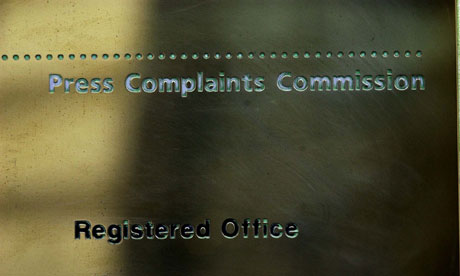
    Press Complaints Commission. Photograph: Martin Godwin for the Guardian
    It was the last big press crisis before the next one. In 1990 two journalists from the Sunday Sport had sneaked into the hospital bedroom of the gravely injured actor Gordon Kaye and started snapping away. Cue outrage. A government-appointed committee chaired by Sir David Calcutt wanted the old Press Council scrapped and a new Press Complaints Commission established. If it wasn't up and working effectively within 18 months, a statutory tribunal – able to license, ban and injunct – would take its place. Editing this paper, I was close to the action. My colleague in press freedom campaigning, Frank Rogers, was running the Newspaper Publishers' Association (NPA). Harry Roche, the Guardian group chief executive, had been persuaded to try to raise the millions needed to make transition to a new PCC possible. I was constantly up and down the stairs to the management floor. Which brings us, with a grimace, to what our current PM blithely calls "the industry". What's the point of self-regulation regimes? To hold on to nurse for fear of something worse – in this case, Downing Street and its associates moving, through new laws, to nobble reporters making waves. Who fears new laws against privacy most keenly? The red-tops and the middle market tabloids, who see much of their business at stake. That's why David English at the Daily Mail and – yes! – Rupert Murdoch were influential behind the scenes in pushing and prodding the PCC into life. Why on earth was the Guardian involved then? Because we understood, from often bitter experience, that there is not one law for the tabloids and another for the rest: my files were full of legalistic threats about privacy from Robert Maxwell and others. The high farce and high cost of defending the publication of Spycatcher against Margaret Thatcher was still fresh in our minds. And press freedom, all round the world, is snuffed out by government-appointed "press councils". But did "the industry" agree? One end – the Financial Times end – wasn't very enthusiastic about helping the Daily Star. The Mirror didn't like anything backed by the Sun, and vice versa. The regional press blamed the nationals. Magazine publishers moaned. Several stark voices said: forget commissions and codes and all that stuff; if the politicians want to take us on over individual cases – say the "persecution" of Jeffrey Archer – then let's fight it out. The Sunday Sport isn't a newspaper anyway. Consensus was, and remains, fragile. Frank Rogers pulled it all together. By the start of 1991 the PCC was up and running. It had no lawyers round the table, because it wanted to deal with complaints fast and cheaply. It had some editors there, because newspaper staff would heed what they decreed. It didn't have fines and penal injunctions. And, in a wholly imperfect world, it worked as well as could rationally be expected. David Cameron was defending its achievements only two months ago. Now, in a switch Robert Mugabe might envy, he pronounces it dead (for not uncovering facts in 2009 that the might of MI5 failed to mention to him before appointing Andy Coulson). Forget press freedom when No 10 panics. Will it be any easier, this time round, to decide on successor regulation? No, it will be much more difficult. The NPA is weaker. Big movers and shakers – from the Mail to Wapping – are hors de combat. The digital revolution peddling true freedom of information ploughs on. Even loftier journalists who've derided the PCC, like those who've betrayed it, haven't thought through what comes after. But, from the Caribbean to the Balkans to southern Africa, all those countries that have built press self-regulation on our model will be worrying. Is a freedom so toiled after and fought for something that can be tossed away? Watch this space: and fear the void. • To comment on this story or any other about phone hacking, visit our open thread.